Late-Night Lifting Isn't Killing Your Metabolism — Here's What the Science Actually Says

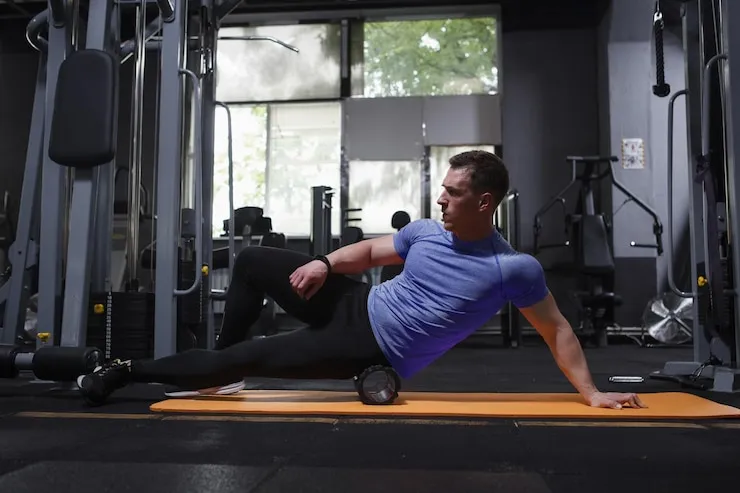
Photo: U.S. Air Force photo by Airman 1st Class Cedrique Oldaker, Public domain, via Wikimedia Commons
Somewhere between your high school gym teacher and your first fitness influencer follow, you probably absorbed the idea that working out late at night is a terrible idea. That it messes with your sleep, tanks your metabolism, and basically undoes whatever gains you worked so hard for. It's one of those fitness "facts" that gets passed around so often it starts to feel like law.
But here's the thing: it's mostly myth. And the science to back that up is more solid than you might expect.
Where the "Late Exercise Is Bad" Idea Came From
The concern isn't completely made up from thin air. Early sleep research did suggest that vigorous exercise close to bedtime could elevate core body temperature and heart rate, potentially making it harder to fall asleep. That logic made sense at the time, and it stuck.
The problem is that fitness culture ran with it way past what the data actually supported. Suddenly, any workout after 7 PM was being blamed for everything from poor sleep to sluggish fat burning. The "no eating after 8 PM" rule got tacked on as a bonus fear, and before long, evening exercisers were being treated like they were actively working against their own bodies.
The reality is a lot more nuanced — and a lot more forgiving.
What Chronobiology Actually Tells Us
Chronobiology is the study of how your body's internal clock — your circadian rhythm — influences biological processes. And when researchers started applying this lens to exercise, the results were genuinely surprising.
A 2019 study published in Experimental Physiology found that evening exercise did not negatively affect sleep quality in healthy adults, as long as it wasn't performed within about an hour of bedtime. A more recent analysis from 2021 reinforced this, showing that moderate-to-vigorous workouts in the evening actually improved sleep efficiency for most participants.
Even more interesting: your body's peak physical performance window tends to fall in the late afternoon to early evening — roughly 4 PM to 8 PM for most people. Muscle strength, reaction time, and cardiovascular output are all measurably higher during this window. So if you're consistently hitting the gym at 9 or 10 PM, you might actually be training closer to your biological peak than the 5 AM crowd is.
The Metabolism Piece — Let's Break It Down
The idea that late-night exercise somehow "slows" your metabolism or shifts your body into fat-storage mode is not supported by current research. Metabolism doesn't flip a switch at sundown.
Your metabolic rate does naturally dip slightly in the evening as part of your circadian rhythm, but that dip is modest and isn't dramatically altered by whether you exercise. What matters far more for fat loss and metabolic health is your total energy expenditure over time, your sleep quality, and your overall nutrition — not the clock on the wall when you finish your last set.
In fact, exercise — regardless of timing — increases post-exercise oxygen consumption (commonly called the "afterburn effect"). That metabolic elevation happens whether you finish your workout at 6 PM or 10 PM.
The "No Eating After 8 PM" Myth — Especially for Evening Exercisers
This one deserves its own callout because it causes real harm for people who train late. If you're finishing a hard workout at 9:30 PM, skipping post-workout nutrition because you've heard you "shouldn't eat after 8" is counterproductive at best and damaging at worst.
Your muscles need protein and some carbohydrates after training to begin the repair process. Denying them that because of an arbitrary time cutoff doesn't make you disciplined — it just makes your recovery worse.
The 8 PM rule was never about exercise. It was a rough heuristic for reducing mindless late-night snacking, and it got wildly overapplied. If you train at night, eat after your workout. Keep it reasonable — a protein shake, Greek yogurt, a small balanced meal — but eat.
Practical Strategies for Smarter Late-Night Sessions
So you're a night owl who loves to train after dark. Here's how to make it work for you without shooting yourself in the foot:
Give yourself a buffer before bed. Aim to finish your workout at least 60 to 90 minutes before you plan to sleep. This gives your core temperature and heart rate time to come back down.
Favor lower-intensity work if you're training very close to bedtime. Heavy lifting or HIIT at 11:45 PM when you need to be up at 6 AM isn't ideal. Mobility work, yoga, or a lighter resistance session is a smarter call.
Nail your post-workout nutrition. Don't skip it. A 20-30 gram protein source with some easily digestible carbs will support recovery without sitting heavy in your stomach.
Watch the stimulants. Pre-workout supplements with high caffeine doses taken at 9 PM can absolutely interfere with sleep. If you need a boost for late sessions, try lower-caffeine options or time your caffeine intake earlier in your pre-workout window.
Keep the lights lower post-workout. Bright light exposure after evening exercise can suppress melatonin production. Dim the lights, put your phone down, and let your body wind down naturally.
The Bottom Line
Late-night workouts are not the metabolic saboteurs they've been made out to be. For millions of Americans who work long hours, have kids, or simply function better in the evening, the choice isn't between morning workouts and optimal health — it's between training at night and not training at all.
And training at night, done smartly, wins every single time.
Your body is more adaptable than the fitness rulebook gives it credit for. Trust the science, tune out the noise, and keep showing up — whatever time that looks like for you.